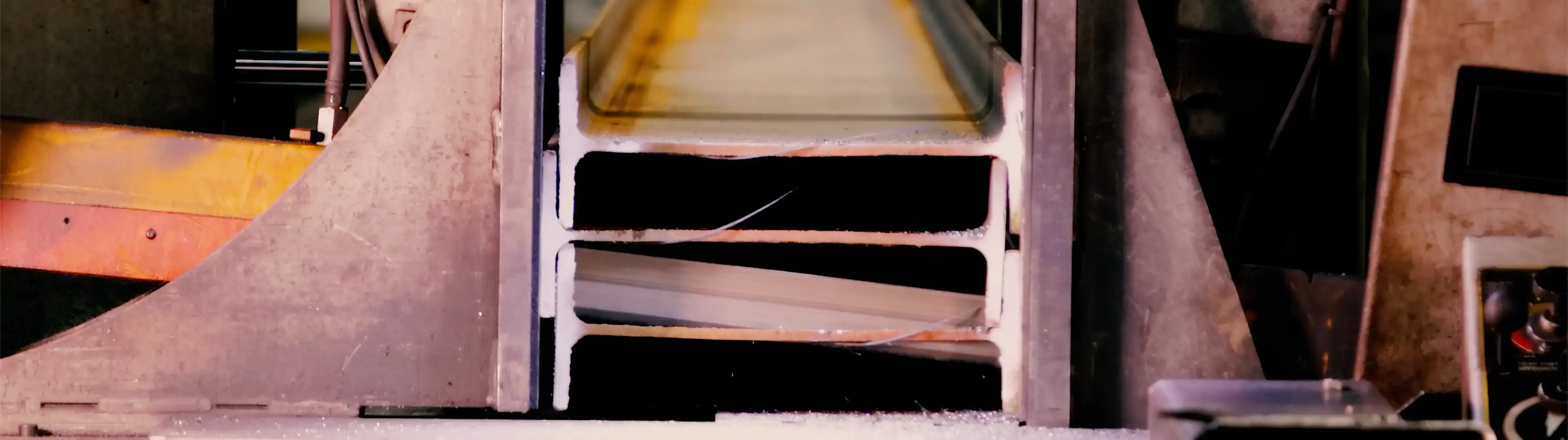
Band Saw

Applications \ Band Saw
Products

All Products
Applications

All Applications
Video

All Video
Support

All Support
Webpages

Downloads

Request Consultation:  Band Saw Lubrication Solution
✕
Watch
 
loading
Clean cuts, not cleanups.
 

Saw blade lubrication

Unist’s band saw blade lubrication solutions use Minimum Quantity Lubrication (MQL) to neatly deliver environmentally-friendly lubricant to your blade, eliminating the mess and hassles of traditional coolants.

MQL is a completely different approach to band sawing:

Less is more - Maximize fluid savings, use only 2–4 ounces of lubricant per shift

Dump the sump - No coolant, no tanks, no messy maintenance

Cut longer, stop less - lubricated teeth run cooler for longer blade life, improved cut quality and less downtime

Keep it clean - Dry chips, cleaner machines, easy cleanup and parts without coolant film

Learn more about MQL

Get consultation
Unist MQL systems
for band saws
  • Easily installed on any saw
  • Eliminate coolant mess
  • Let operators see the cut
  • Use very little lubricant
Unist saw nozzles
keep you cutting.

Deliver critical lubrication to blade sides, teeth, and gullets for smooth cutting with less blade changes.

The hidden costs of coolant
Switch to Unist MQL and eliminate these costs.
  • Coolant Equipment (skimmers, vacs, floor scrubbers, etc.)
  • Coolant Consumables (biocide, defoamer, rags, filters, etc.)
  • Labor (sump cleanouts, machine wipedowns, floor cleaning, concentrate monitoring, etc.)
  • Health/Safety (Slip/fall risks, dermatitis, air quality, odors)
bandsaw benefits
Eliminate flood coolant mess, treatment and disposal
Improve blade life up to 500% and prevent galling
Use as little as 2–4 ounces per shift
Keep operators happy with skin-friendly Coolube® lubricant
Increase the value of chips/swarf that are virtually dry
Use environmentally-friendly, renewable lubricants

Unist MQL components

(Click to learn more)
Unist MQL System
Nozzle
Unist Lubricant
✕

Saw Types:
  • Pivot/Scissor
  • Dual & Single Column
  • Production Dual Column
  • Structural
  • Tube
  • Table/Portal
Metals:
  • Aluminum
  • Stainless Steel
  • Carbon Steel
  • Alloy/Tool Steel
  • Cast Iron
  • Inconel
  • Titanium
  • Magnesium
  • Copper Alloys
Blades:
  • Carbon Steel
  • Carbide
  • HSS
  • Alloy
  • Bi-Metal
  • 15n20
  • L-6
Profiles:
  • Bundles
  • Beams
  • Channels/Angles
  • Extrusion
  • Bars/Rods
  • Tube/Pipe
  • Plates/Blocks
View products
Pretty amazing on how little oil it used and clean it was
We replaced fab shops bandsaw with a CNC one and it had a Unist system one it. We thought it would be a joke but it was pretty amazing with how little oil it used and clean it was. Plus cuts and blade life were better. We converted several of the other older saws over to them and got rid of the coolant tanks and systems.
- Firebrick43, User, Garage Journal
Full Testimonial
Unist Saw Blade Lube System
"We've get better blade life and productivity while eliminating the maintenance of flood coolant."
We've been able to get the same or better blade life and productivity out of the Saw Blade Lube Systems while eliminating the maintenance problems we had with flood coolant.
- Denver Nelms, Vice President, RHW Metals
Full Testimonial
"With the Unist coolant, you can clean the saw with a vacuum cleaner"
The guys like it because before they'd have to wear leather aprons so they wouldn't get this flood coolant all over their clothes.
- Rick R, Facilities Leadman, Therma-Tron-X, Inc.
Full Testimonial

Dry chips = better cuts, less downtime, less hassle

Chip evacuation is critical for band saw blade performance. Each gullet must be clear before re-entering the cut. Flood coolant can make chips sticky causing them to pack gullets. With Unist MQL, chips stay dry, free-flowing, and release from gullets easily, allowing each tooth to cut cleanly. This results in less friction, lower cutting forces, longer blade life, and straighter cuts with less drift and chatter. Wet, coolant contaminated chips can clog chip conveyors, require frequent sump cleaning and are less profitable when recycled. MQL produces clean, dry chips that are easy to clean, handle and are worth more in scrap value.

Wet, sticky chips can load gullets affecting cut quality.

Dry chips release from gullets, maintaining a smooth cut.

MQL produces chips dry enough to handle and store easily, like we do in the Unist shop.

 MQL (Minimum Quantity Lubrication)Traditional Flood Coolant
Blade LifeLonger - precise lubrication reduces friction & heatShorter due to heat, inconsistent lubrication
Cut QualityClean, precise cuts, steadier blade tracking, improved surface finishCoolant can create sticky chips, mask problems - poor finish
Fluid ConsumptionOunces per shiftGallons per shift
MaintenanceMinimal - refill reservoirFrequent sump cleaning, monitoring, treatment, disposal
Chip HandlingDry, clean chips; easier handling & cleanup, higher scrap valueWet, sticky chips - hard to recycle
Post-process CleaningWipe clean if necessaryIntensive cleaning prior to paint or weld
WorkplaceClean, dry environment; better visibility & safetyMessy floors & equipment, coolant mist/fog
CostLow fluid use, reduced maintenance - quick ROIHigh ongoing fluid maintenance & disposal costs
EnvironmentPlant-based options, no disposal, reduced wasteCoolant disposal impact, bacteria growth, rust

Our OEM sawing partners

Wellsaw logo
Wellsaw
Roll In logo
Roll In
HE&M logo
HE&M
HYDMECH logo
HYDMECH
DoALL logo
DoALL
Cosen logo
Cosen
Amada logo
Amada

Components of a Unist solution

1
MQL System

Precision lubricant applicators make dialing-in proper saw lubrication quick and easy.

2
Unist Lubricant

High performance lubricants combat friction and protect blades.

3
Saw Nozzle(s)

Saw-specific nozzles apply lubricant precisely. Available in configurations to fit any saw.

Band saw nozzles

BAT nozzle
BAT nozzle

Easily fits on a wide variety of circular saws, vertical band saws, and horizontal band saws

Band saw blade nozzle

Delivers the ideal spray pattern for horizontal band saw blade lubrication

Band saw guide nozzle

Lubricates the sides of the blade to help minimize guide block friction

Custom nozzles
Custom nozzles

For OEMs we offer custom nozzles to ensure the best solution for your application

Ready to try sawing with Unist?

With years of experience as the preferred lubrication equipment supplier for many global OEMs, we can recommend the best system for your saw.

Frequently asked questions

Showing 3 of 11 Show all
Q:
Is MQL a new, experimental technology?
A:
NO - Unist has over 65 years of experience pioneering and offering Minimum Quantity Lubrication (MQL) as a metalworking solution. Our products are widely accepted and used by major OEM saw manufacturers and fabrication shops around the world. Unist MQL is a mature, industry proven solution.
Q:
Why should I spend money on MQL when flood coolant works?
A:
An investment in a Unist MQL system pays back quickly by eliminating flood coolant purchases, waste disposal fees, and extended blade life. Most customers see ROI in months, not years and are pleased to no longer have coolant-related maintenance or costs.
Q:
Can MQL really deliver the same surface finish or accuracy?
A:
YES - By minimizing friction and avoiding coolant contamination, MQL produces clean, precise cuts with dry, recyclable chips. Flood coolant can actually mask poor cutting conditions by flooding the workpiece, while MQL gives operators a clear view of the cut for better control.
Q:
Do blades actually last longer with MQL?
A:
YES - Many customers report same or better blade life after switching to MQL. While blade life is affected by many factors (like material, speed, and feed rate), MQL's focus on precision lubrication significantly reduces friction and heat at the cutting point. This often results in a dramatic increase in blade life compared to flood coolant.
Q:
Does MQL require operator training?
A:
NO – MQL is actually simpler: operators just keep a small reservoir filled. No more monitoring fluid levels, mixing ratios, or tramp oil. Once dialed in, settings remain consistent.
Q:
Does MQL work with all metals?
A:
YES – MQL is a great solution for cutting ferrous and non-ferrous metals including: carbon steel, tool steel, stainless steel, aluminum alloys, cast-iron, superalloys, titanium, magnesium, copper, and zinc die cast.
Q:
Does MQL work in "heavy duty" or tough cuts?
A:
YES - MQL is industry proven in high-demand sawing applications. You’ll find manufacturers around the world successfully using MQL to cut large structural profiles, military-grade alloys, and process space travel components.
Q:
Is MQL only good for cutting aluminum?
A:
No, MQL is highly effective for both ferrous and non-ferrous materials. While MQL is an excellent option for aluminum, it’s also a great lubrication method for high-strength materials. You'll find MQL is successful for cutting tool steel, stainless steel, and even exotic alloys like Inconel.
Q:
How does MQL compare to flood, especially on large structural profiles?
A:
The difference is the approach: Flood coolant attempts to cool the heat after it's generated. MQL prevents the heat from generating in the first place. By applying a small, precise amount of specialized lubricant to each blade tooth before it engages the cut, MQL drastically reduces friction. This means heat buildup is controlled at the source. The blade can then perform with maximum efficiency, regardless of stock profile or size.
Q:
Where does the lubricant go when sawing with MQL?
A:
When utilized correctly, nearly all of the lubricant applied will be consumed by cut. Resulting in clean, virtually dry parts and chips that require no post-process cleanup.
Q:
Without flood coolant, won't the blade overheat and wear out faster?
A:
NO - MQL targets a tiny, controlled amount of lubricant directly at the blade–tooth interface, exactly where it’s needed. This reduces friction and heat far more efficiently than flood coolant washing over the entire blade. Many users report longer blade life and more consistent cut quality compared to flood systems.